The Digital Divide: Supporting Older New Zealanders To Stay Connected
Do you remember when most of our shopping was done in stores, healthcare was in clinics, and banks and post offices were the heart of the town? And when we wanted to catch up with friends or neighbours, we walked out of the house and across the lawn, or down the road, or hopped in the car and went for a cuppa.
We are now living in a largely digitised society and along with important everyday functions like shopping and banking being online, even social activities are now heavily reliant on websites, social media pages, apps, and online systems.
For some, this shift means convenience and efficiency but for a significant number of older New Zealanders, the move toward digital-first services is resulting in frustration, exclusion, and growing isolation. It represents a digital divide between the services they need and the technology they can’t navigate.

When does technology become too hard?
Digital participation declines significantly with age, dropping from over 97% for under 65s to as low as 50% for those 85 and older.
Many seniors didn’t grow up with computers, smartphones, or the internet as part of daily life. Unlike younger generations – especially digital natives – older adults are often expected to learn entirely new systems later in life, frequently and without support.
Even basic online tasks can become overwhelming:
– Managing passwords
– Completing online forms
– Using two-factor authentication
– Ordering products online
– Navigating confusing websites
– Installing apps
– Avoiding scams and phishing attempts
For people unfamiliar with technology, these systems can feel intimidating rather than empowering

Remember when we still had banks and post offices?
One of the biggest challenges is that digital participation is becoming increasingly mandatory.
We all remember when the local bank branches closed or consolidated with the neighbouring town. Banks continue closing physical branches and encouraging online banking. Government departments push online self-service systems. Medical appointments are often booked through apps or portals. Customer support increasingly relies on chatbots and automated systems.
For digitally confident people, these changes may seem minor. For older people without digital skills, there are now barriers to independence with what were once simple everyday tasks that were once completed face-to-face. Without assistance from family or carers, some older adults struggle to access essential services, creating feelings of dependence, embarrassment, or exclusion.

Campaign for Inclusion in a Digital Age
In just three months, Citizens Advice Bureau, recorded over 4,000 cases of digital exclusion affecting access to essential services. They are currently running a Campaign for Inclusion in a Digital Age to tackle this issue. You can share your story at https://inclusioncampaign.cab.org.nz/get-involved
The digital divide is especially severe in some rural parts of New Zealand, where internet connectivity remains inconsistent or expensive. Cost can be another major barrier. Smartphones, laptops, broadband plans, software subscriptions, and repairs can place significant pressure on retirees living on fixed incomes.
$3b lost in New Zealand online scams in 2025
Many older New Zealanders are fearful about online scams and fraud, and it’s not unfounded, with more than $3 billion lost in New Zealand scams in 2025. Older people are frequently targeted by scammers through emails, text messages, fake websites, and phone calls. As cybersecurity threats become more sophisticated, many older people we talk to are avoiding online systems altogether because they fear making costly mistakes.
Covid-19 and the growth of social exclusion
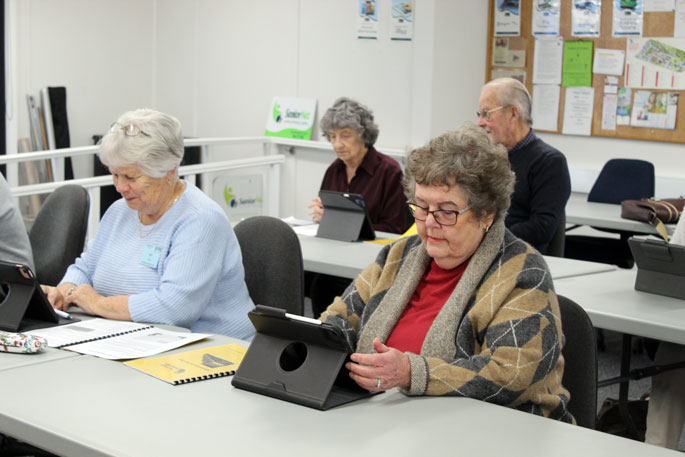
Technology is becoming increasingly central to social participation, even amongst family who regularly communicate through messaging apps and video calls. We also tend to share news, events, and public information digitally. Older adults who cannot access these platforms risk becoming disconnected from both services and relationships.
The COVID-19 pandemic exposed this divide clearly. While many New Zealanders stayed connected through video calls, online shopping, and social media, many digitally excluded older adults experienced heightened loneliness and reduced support.
How can we help bridge the gap?
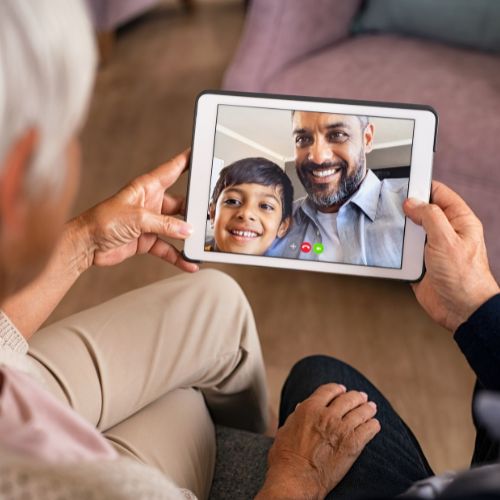
Despite the challenges, many organisations across New Zealand are helping older adults build digital confidence. Community initiatives such as SeniorNet, library technology classes, Age Concern programmes, U3A groups and local volunteer tutoring schemes are providing practical support in friendly, low-pressure environments.
Technology companies and government agencies have a responsibility to better understand the needs of older adults and support learning and upskilling, as well enhancing systems to improve accessibility by:
- Simplifying website design
- Using larger fonts and clearer navigation
- Applying accessibility tools to online platforms
- Providing human support options
- Maintaining offline alternatives
- Designing systems with older adults in mind
If you’re interested in sharing your story about digital inclusion or exclusion, please reach out to us at [email protected].
Join us at Dying Matters Week 2026
Dying Matters Week connects people across Aotearoa to start conversations in a safe space, learn from local experts and seek support to plan for later life and end-of-life and to navigate grief and loss. Sign up below to be the first to know about events and activities in your region.
Get involved in Dying Matters Week, running events, volunteering, giving talks or sponsoring programmes. Stay up to date with the latest events, resources, and discussions via our monthly newsletter.