I am SUPPORTING grief
As a School
Although children spend only around one-fifth of their waking hours at school over the course of a year, schools play an outsized role in their lives. They are places where children build relationships with trusted adults, develop friendships, establish routines, and experience a sense of belonging and normality.
For this reason, schools are uniquely placed to support children following the death of a parent, sibling, whānau member or someone else who is important to them. A compassionate response also extends beyond the bereaved student. Thoughtful conversations in the classroom help classmates understand how to support a grieving friend, normalise the wide range of emotions children may experience after a death, and reduce feelings of isolation.
By fostering understanding, empathy and open communication, schools can create environments where every child feels safe, supported and connected during one of life’s most challenging experiences.
Grief education in schools
While many schools provide excellent pastoral care, support can vary depending on the school’s size, resources, and staff experience. There is growing recognition that New Zealand could do more to prepare schools and students for bereavement.
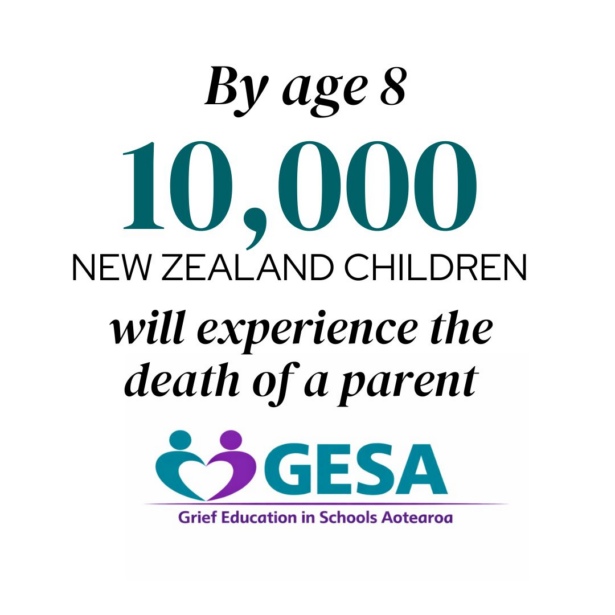
A recent submission by grief experts recommended reintroducing grief education into the curriculum and providing more training for teachers, noting that more than 10,000 New Zealand children have lost a parent by the age of eight.
Grief education introduces children and young people to death, dying and bereavement in an age-appropriate, culturally sensitive way.
The Pōhutukawa Model
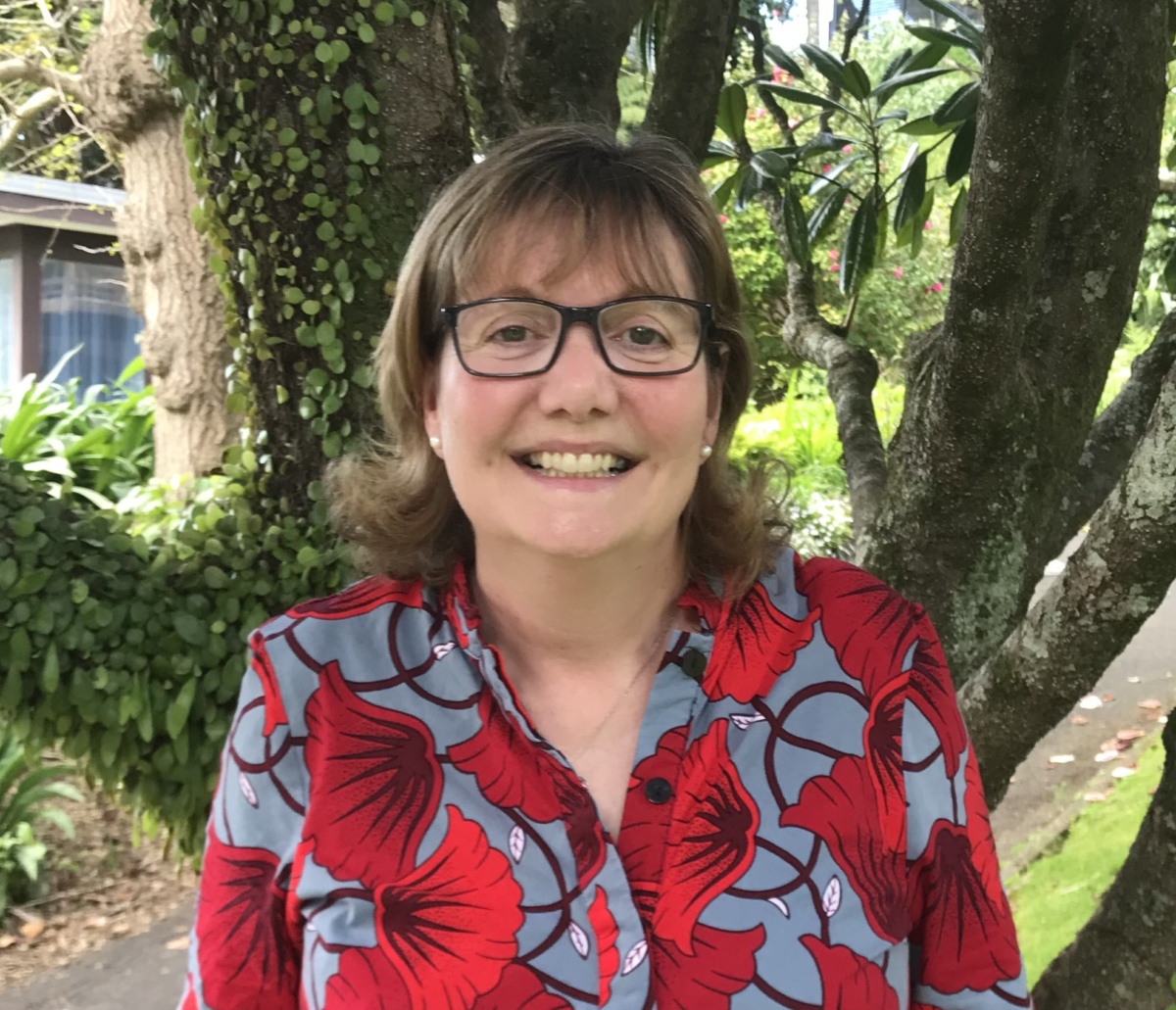
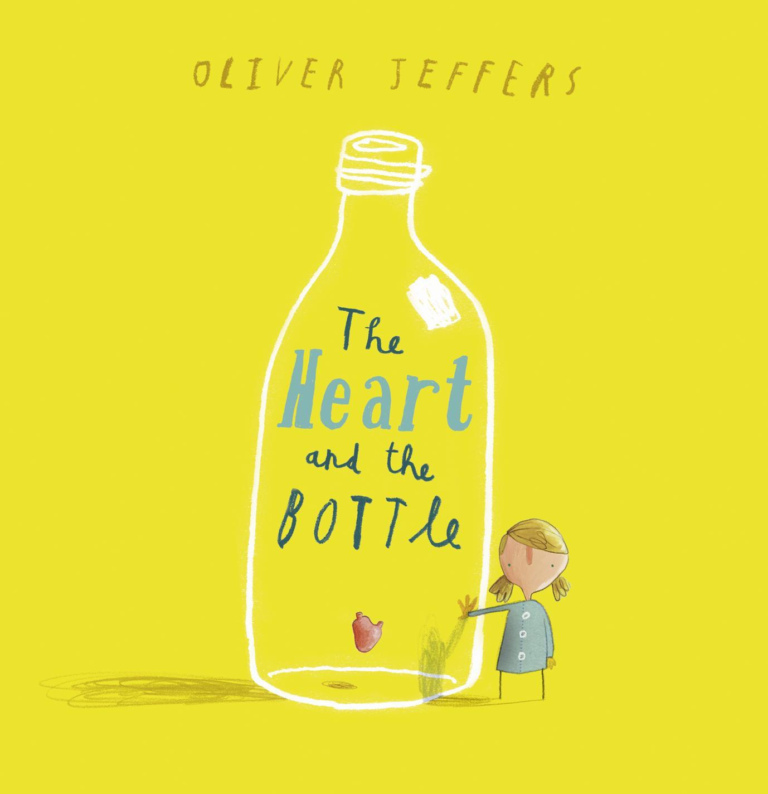
Dr Elisabeth Price’s (member of GESA) Pōhutukawa Model, was developed out of her PhD research, to help adults have conversations around death with young people. One proactive approach to conversations about death is to read, explore and discuss picture books and chapter books that include themes of death.
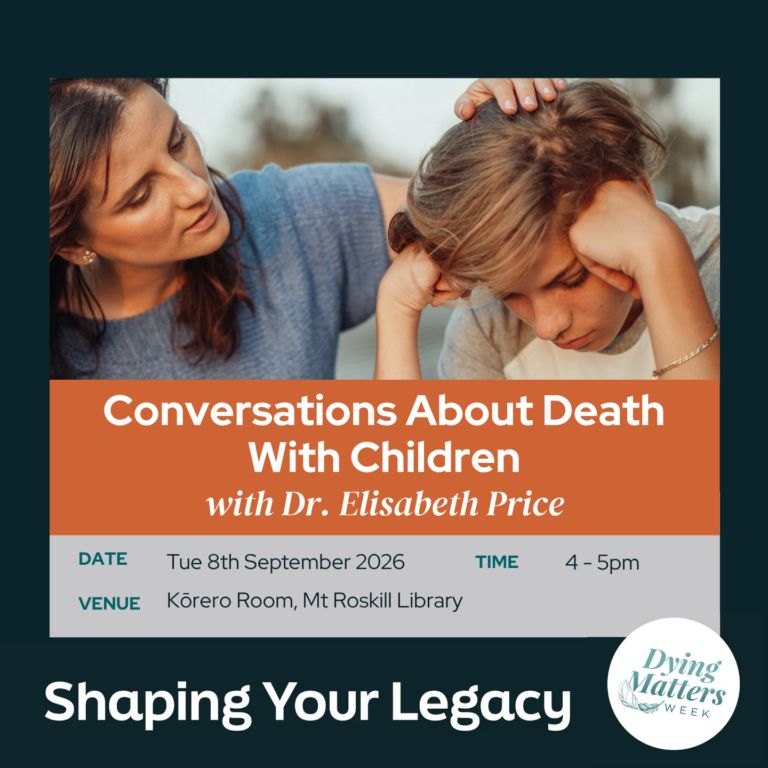
Elisabeth gave an insightful presentation on talking with children about death and dying as part of Dying MAtters Week. This session explores how to prepare children for experiences of loss, whether through family members, friends, or pets, providing practical guidance for parents.
Dying Matter Week 2026 Events
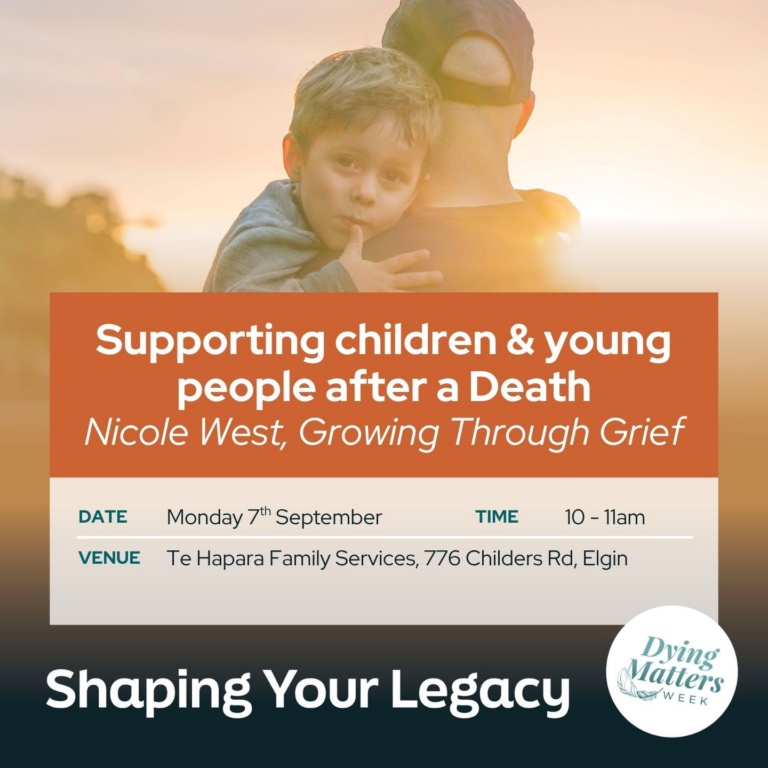
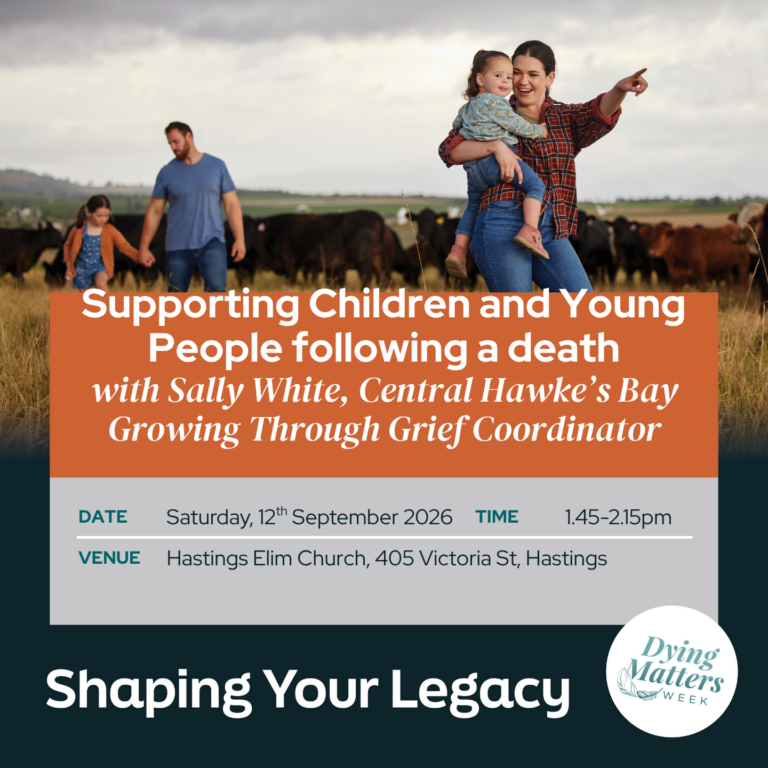
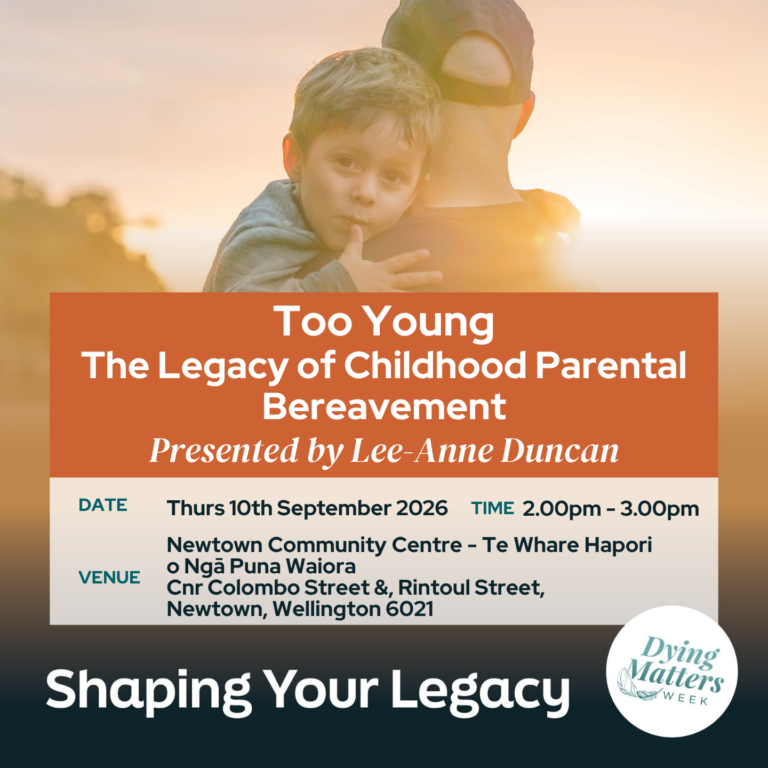
The following Dying Matters Week events focus on supporting children and young people with grief and loss. Search all events in your region…
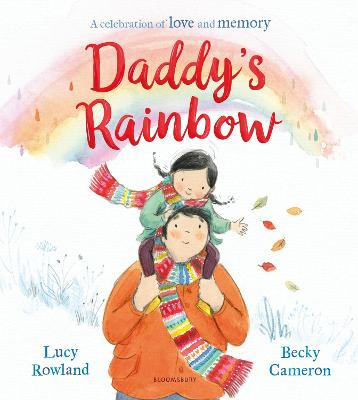
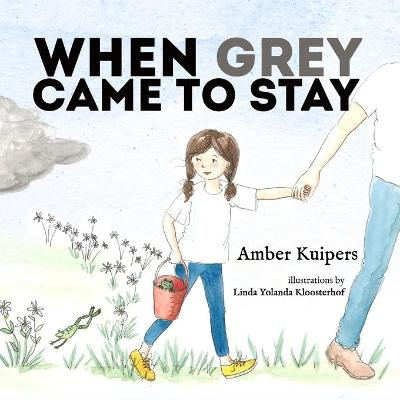
Browse picture books for young children

find grief support services in your region
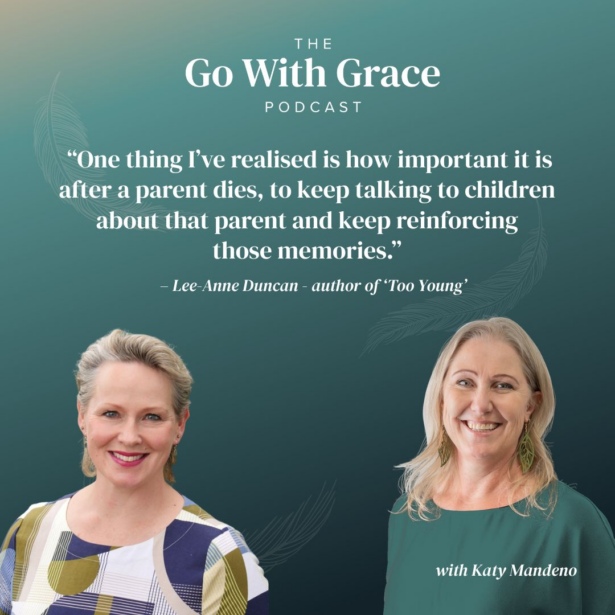
‘Too Young‘ Author, Lee-Anne Duncan
A Wellington-based journalist and writer, Lee-Anne Duncan is using her experience of losing a mother when she was nine, along with other New Zealanders’ stories, to create a forthcoming book and website that gives voice to a child’s experience of parental death and its impacts.
As well as helping others who lost their parents young, Lee-Anne’s focus is on how we – as parents, family and friends, and as a society – can mitigate some of the harms from early parental loss. Many of her interviewees didn’t feel equipped to address their grief until their middle years, and spoke of their wish to have had “the tools, the language” much younger to share their feelings, to ask for help.
Support groups and resources for young people
There are a number of support groups and organisations in New Zealand focused on supporting children, teenagers and young people with grief. View all New Zealand-based support services…