Pallbearers
Being a pallbearer at a loved one’s service is a significant role and a great honour. It can be an opportunity to show your love and respect for the person who has died and it may mean a lot to the bereaved to see their loved one’s closest family members and friends carrying their coffin or casket to their final resting place.
In many cultures, pallbearing isn’t just “helping carry” – it’s a public sign of respect, responsibility, and closeness to the deceased.
What to expect if you’re a pallbearer
If you have been asked to be a pallbearer, it’s important to understand the responsibilities that come with the role.
Here are some things to consider or expect if you are a pallbearer:
- The role of a pallbearer requires a certain level of physical fitness and emotional strength.
- There can be around 6 to 8 pallbearers, depending on the size of the coffin or casket.
- On the day of the funeral service, it’s a good idea to arrive early to meet with other members of the funeral procession so you can be given important instructions, such as when to lift and when to lower the coffin or casket.
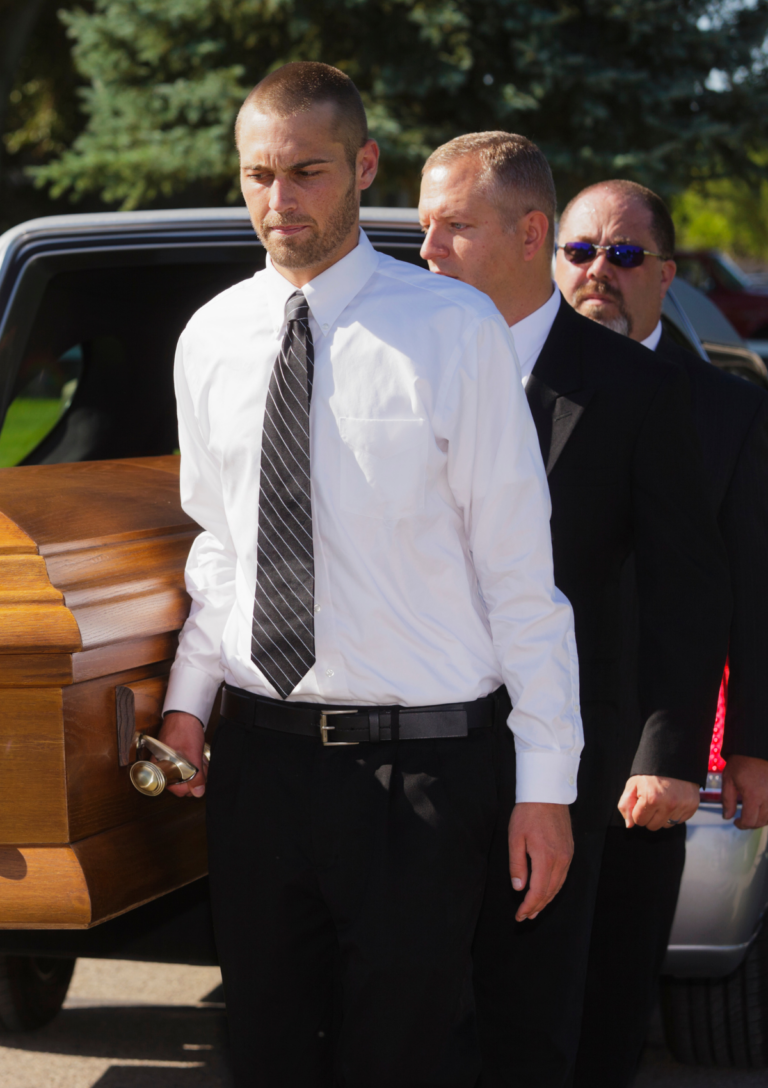
- When it is time to carry the coffin or casket, the pallbearers gather around it and lift it with care, taking care not to jostle or bump it. They then walk in a slow, solemn procession.
- Pallbearers are responsible for carrying the coffin or casket in a slow, solemn procession from the vehicle that transported the person who has died to where their final service is being held.
- You may either be carrying the casket or coffin at waist height, or on your shoulders if the family has requested this and it is safe to do so. If any of the pallbearers do not feel that they can shoulder the coffin, it will either be carried at waist height or with the assistance of a small trolley, known as a wheel bier.
- Pallbearers will also carry the casket or coffin back to the vehicle, and from there to the graveside or crematorium, or where the final resting place will be.
Do you want to be a pallbearer?
Being asked to be a pallbearer is an honour, and an opportunity to show your respect for the person who has died.
If you have been asked to be a pallbearer, you might feel nervous about the responsibility of carrying a loved one to their final resting place. This is a very normal feeling. If you don’t feel comfortable completing this role, then you are welcome to politely decline the offer and let whoever is arranging the funeral know your reasons why – they will most likely understand and respect your decision.
There are other ways to be involved in the service, such as being a speaker at the funeral.
Frequently Asked Questions
Anyone can be a pallbearer regardless of gender, age, or relationship to the person who has died. Pallbearers are typically close family members such as siblings, adult children, grandchildren, nieces and nephews, or close friends and colleagues. Both men and women can serve as pallbearers. The most important considerations are that the person has a meaningful connection to the person and feels physically and emotionally comfortable carrying out the role.
Most funerals in New Zealand have 6-8 pallbearers, as this is the standard number needed to safely carry a casket using the three handles on each side. However, you can have anywhere from four to eight pallbearers depending on the size and weight of the casket.
Usually not as full pallbearers (for safety), but children can sometimes walk alongside, carry flowers, or take part symbolically.
A casket with a body can weigh between 125-180 kilograms depending on the materials and size. However, the weight is distributed evenly among six pallbearers, meaning each person carries approximately 30 kilograms. The head end of the casket is typically heavier, so taller or stronger pallbearers are usually positioned there. If anyone is concerned about the weight, wheeled equipment can be used to assist.
An honorary pallbearer is someone recognized for their special connection to the deceased but who does not physically carry the casket. They may walk alongside or behind the casket, carry meaningful items like photos or flowers, or simply be acknowledged in the service. This role is ideal for elderly family members, children, people with physical limitations, or when you want to honour more than six people. There is no limit to how many honorary pallbearers you can have.