Islam
Followers of Islam are called Muslims. There are two types of Muslims – Shi’ite and Sunni, so beliefs and customs may be slightly different for each. Muslims believe that the soul continues to exist after death.
Preparing
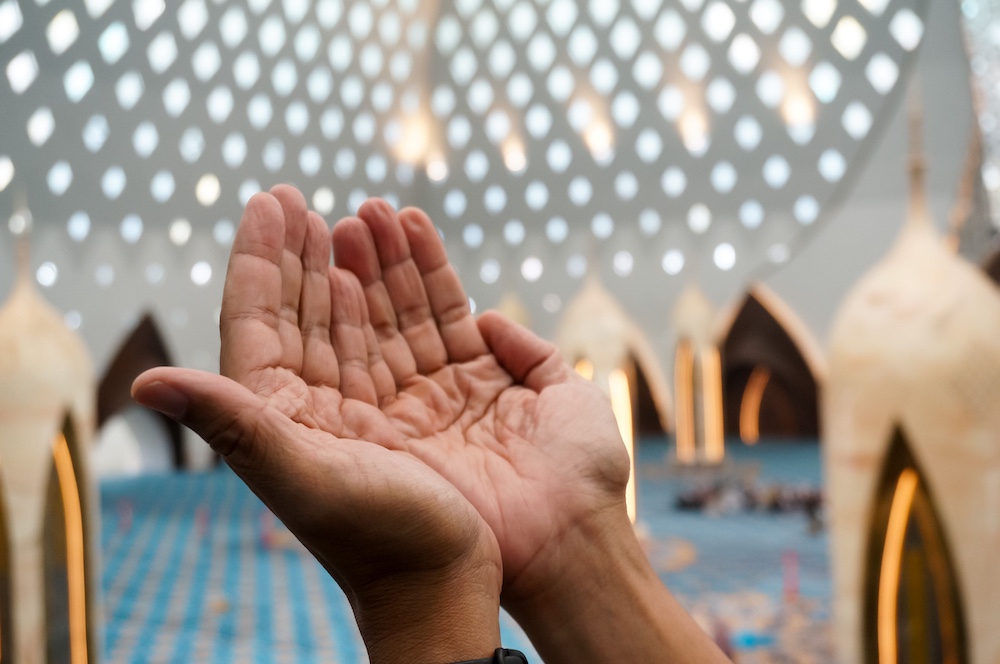
Muslims should be prepared for death at any time, which is partly why daily prayers are so important. A dying person may wish to die facing Mecca, the Muslim holy city. Family members and elders recite Muslim scriptures from the Koran and pray for the person.
The body
The eyes of the deceased will be closed. For the majority of Muslims hands are placed at the sides of the body during burial however this may vary within smaller communities or groups. The body will be washed by family or friends. It will be wrapped in a white shroud and prayers will be said.
Muslim funerals
The body will be buried within 24 hours as Muslims believe the soul leaves the body at the moment of death. The funeral will take place either at the graveside and involve prayer and readings from the Koran.
Burial
No women are allowed to go into the graveyard. Before burial a prayer will be recited. Mourners are forbidden from excessive demonstrations of grief. The body will not be cremated as this is not permitted in Islam. The deceased will be buried with their face turned to the right facing Mecca. A coffin is usually not used but a chamber dug into the grave and sealed with wooden boards so no earth touches the body. The grave will usually be simple without any fancy decoration.
After death
According to the Qur’an and the teachings of Prophet Muhammad (peace and blessings be upon him), visiting graves is encouraged as a way of remembering death and the Hereafter. There are differing scholarly views about women visiting graves: many Muslim scholars permit women to visit, particularly where visits are not excessive and do not involve practices prohibited in Islam, while other scholars take a more restrictive view.
Islam also makes an important distinction between formal mourning practices and the experience of grief itself. Authentic narrations state that formal mourning for someone other than a husband should not extend beyond three days; for a widow, the prescribed mourning period is four months and ten days. This does not mean that a person is expected to stop grieving after three days.
The Qur’an itself gives a powerful example of enduring grief through the story of Prophet Ya’qub (Jacob), who grieved deeply for his son Yusuf (Joseph) over a long period. His eyes became white with sorrow, yet the Qur’an also describes his response in terms of patience and his continuing trust in God.
For many Muslims, visiting the graves of loved ones and praying for them can remain an important part of remembrance. There is no universally prescribed Islamic requirement to gather at the grave or home on particular anniversaries, such as 40 days after a death, although these and other commemorative practices are observed within some Muslim cultures and communities.