Guests and Invitations
For a private farewell, you will need to send invitations to the people you wish to include. You may have a clear idea of who should be there, or perhaps there are people you would prefer not to invite – writing a guest list will help you manage this with your family members.
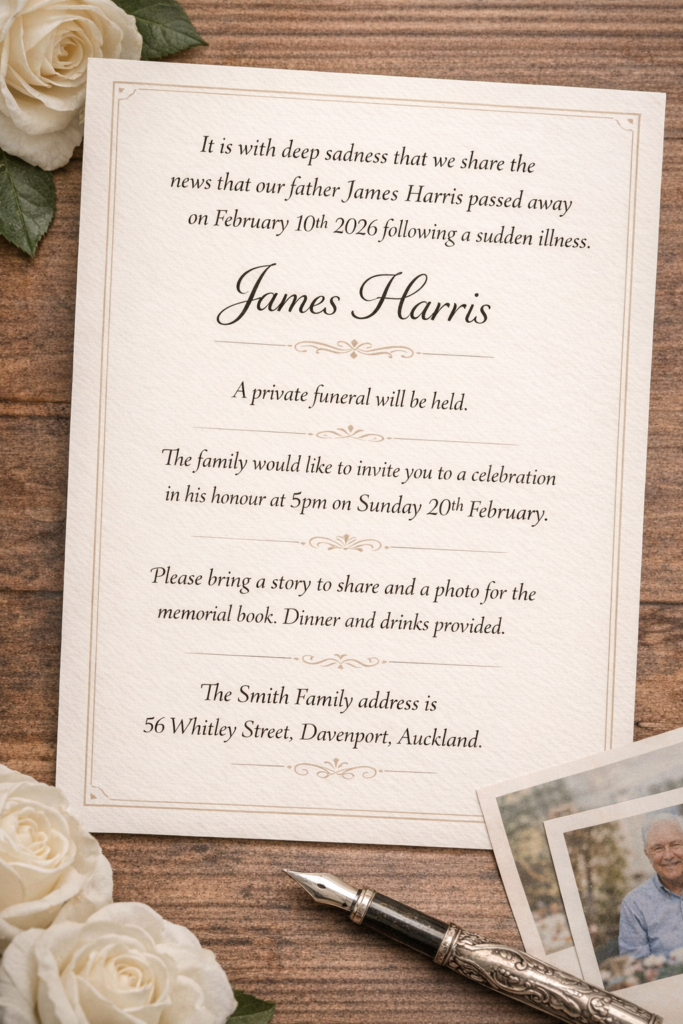
What details should I include in a funeral invitation?
Whatever format you choose for the invitations, include all of the information that the guests will need to know to minimise the queries you will need to respond to in the run up to the day. Important details to include on funeral service and wake invitations are:
- Name of the deceased
- Arrival time, date and address of the farewell service
- Whether the service is public or private
- Contact information and a date to RSVP by, if required
- Information about the wake if one is taking place after the farewell
- Information about whether flowers or charity donations in lieu of flowers are preferred
- Any specific venue information e.g. parking
How can I communicate public vs private?
The key is to be very explicit about what’s public, what’s invite-only, and what people should do if they’re unsure. Don’t rely on hints as people can misread them when emotions are high. For example:
Funeral Service (Public):
Date/Time/Location
Burial / Committal (Private):
For family only
Wake / Refreshments (Private):
By invitation
Seating at a funeral
Traditionally, the first few rows of seating are reserved for close family. If there are elderly guests attending, you may want to reserve seating for them near the front. If you are working with a funeral home, they should have ‘Reserved’ seating signage that you can use, or you can create your own. Ask a family member to be in charge of escorting people to their seats.
If you are providing food and drink, or if you would like to know how many elderly guests are attending so you can reserve seating for them, you may find it helpful to know who to expect. Asking for RSVPs can be a good option to get an idea of numbers if you are posting an invitation publicly, such as on the deceased person’s Facebook page, rather than sending invitations out to a set guest list.

Inviting people to watch a funeral via live streaming
Live-streaming means broadcasting the service live, as it happens, via the internet. If there are friends or family members who would like to attend the funeral or memorial service of your loved one, but they are unable to attend in person, then live-streaming the service may be something that you would like to consider.
A link and a password are needed to access the live stream and these details along with instructions on how to join are supplied to the family by the funeral director, video company, or person setting up the live-stream in the days before the funeral service.
You can then share the joining details and live stream link with anyone you wish via email, text, on a Facebook page or in a group chat. Make sure you include the timezone (especially if people are overseas) and tell people to join 5–10 minutes early. If it’s private, mention if people need a password and ask people not to share piublicly.